
Are Peptides Legal in the United States in 2026?
The legal status of peptides in the United States depends entirely on intended use, classification, and regulatory pathway.
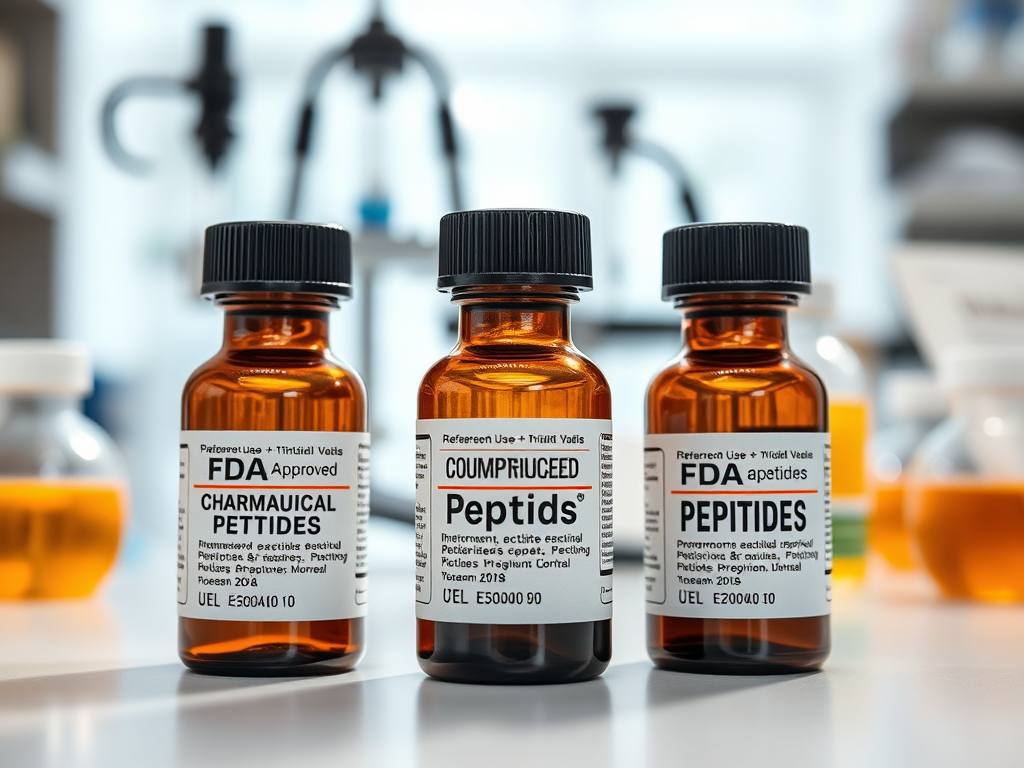
In 2026, peptides fall into three broad categories:
1. FDA-Approved Pharmaceutical Peptides
2. Compounded Peptides (regulated differently)
3. Research-Use Peptides (not approved for human consumption)
Understanding the distinction is critical for researchers, suppliers, and institutions.
- FDA-Approved Peptides
Some peptides are fully approved pharmaceutical drugs and are regulated as such by the U.S. Food & Drug Administration (FDA).
Examples include:
• Semaglutide (GLP-1 receptor agonist)
• Tesamorelin
• Bivalirudin
• Oxytocin
These compounds have gone through full clinical trials and received FDA approval for specific indications.
You can verify FDA-approved peptides through the official FDA drug database (view source)
Important: FDA approval applies only to specific brand-name products, dosages, and indications — not to bulk research peptides.
- Compounded Peptides
Certain peptides may be compounded by licensed pharmacies under federal and state guidelines. However, recent FDA actions have tightened scrutiny on compounding practices, especially regarding peptides not included on approved bulk substance lists.
For regulatory guidance, see:
• FDA Human Drug Compounding (view source)
• Section 503A and 503B of the Federal Food, Drug, and Cosmetic Act
The regulatory landscape continues evolving in 2026, particularly around GLP-1 analogs and growth hormone secretagogues.
- Research Peptides (Laboratory Use Only)
Many peptides sold online fall into the category of research-use compounds.
These compounds:
• Are not FDA-approved drugs
• Are not intended for human consumption
• Are sold for laboratory, analytical, or in vitro research purposes
• Must not be marketed with therapeutic claims
Under U.S. law, research chemicals are legal to sell and purchase provided they are not marketed for human use.
The Federal Food, Drug, and Cosmetic Act prohibits introducing unapproved drugs into interstate commerce for human consumption. However, the sale of compounds clearly labeled for research use only is permitted when compliant with federal regulations.
For statutory reference:
• Federal Food, Drug, and Cosmetic Act (FD&C Act) (view source)
Are Research Peptides FDA Approved?
No.
Research peptides are not FDA approved for human use unless explicitly listed as approved pharmaceutical drugs.
That distinction matters legally.
A peptide may:
• Exist in published research
• Be referenced in clinical trials
• Be manufactured in GMP environments
And still not be FDA-approved for human consumption.
Researchers should consult ClinicalTrials.gov to review ongoing investigational studies:
Is It Legal to Buy Peptides in the USA?
In 2026, it is legal to purchase peptides in the U.S. when:
• They are clearly labeled for research use only
• No human consumption claims are made
• They are used in laboratory or investigational settings
It is illegal to:
• Market unapproved peptides as treatments
• Make disease or therapeutic claims
• Sell them as dietary supplements
The regulatory risk lies in marketing claims – not merely in chemical existence.
FDA Enforcement Trends in 2025–2026
Recent FDA enforcement has focused on:
• Misbranded peptide products
• Unapproved drug claims
• Compounded GLP-1 analogs
• Online marketing language implying therapeutic use
The agency has increased warning letters to companies making health claims about peptides without approval.
You can review enforcement actions here (view source)
How Main Peptides Approaches Compliance
At MainPeptides.com, all compounds are:
• Sold strictly for laboratory research use
• Not intended for human consumption
• Not marketed with therapeutic claims
• Accompanied by batch documentation and testing where applicable
We maintain a research-focused model aligned with federal guidelines and industry best practices.
For more information, explore:
• Peptide Storage & Stability Guidelines
• Research Guides Overview
• Affiliate Program Terms & Compliance
• Metabolic Research Peptides
• Longevity Research Peptides
Frequently Asked Questions
Are peptides scheduled substances?
Most research peptides are not controlled substances. However, certain hormone analogs may fall under specific regulatory frameworks.
Researchers should consult DEA scheduling lists if working with controlled compounds:
https://www.deadiversion.usdoj.gov/schedules/
Can peptides be sold as dietary supplements?
No. Under the Dietary Supplement Health and Education Act (DSHEA), most synthetic peptides do not qualify as dietary ingredients.
Why are some peptides prescription-only?
If a peptide is FDA-approved as a pharmaceutical drug, it is regulated like any other prescription medication.
The Bottom Line
In 2026, peptides exist within a layered regulatory environment:
• Some are fully FDA-approved drugs.
• Some may be compounded under pharmacy regulations.
• Many are legally sold as research-use compounds.
• None may be marketed with unapproved therapeutic claims.
The legality is not about the molecule – it’s about classification and marketing.